A pallet of broken glass arrives at your distributor and half the run is gone before a single unit sells. Your freight invoice climbs every quarter because you are paying, by the pound, to ship heavy containers that hold a featherweight product. And on the retail shelf your bottle disappears into a wall of identical cylinders, indistinguishable from a dozen competitors who all bought the same stock mold. These are not edge cases — they are the everyday, margin-eroding realities of choosing the wrong packaging, and most brand founders only feel the full sting after the orders are already placed.
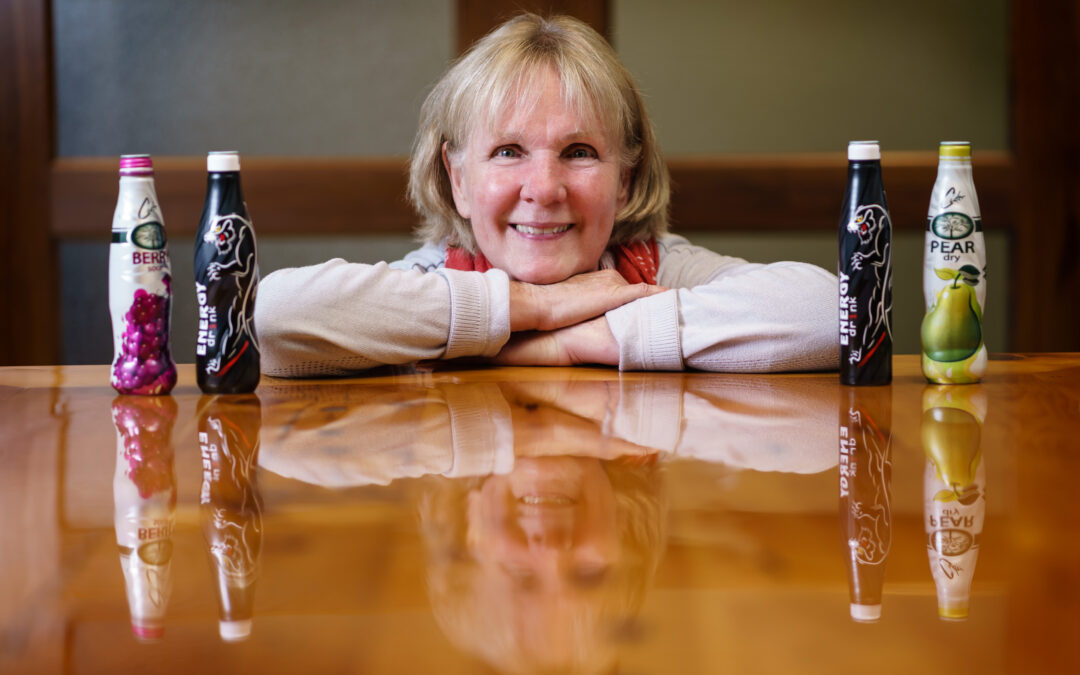
Aluminum vs glass vs plastic packaging is the question that sits underneath every one of those pains, and getting it right shapes your margins, your shelf presence, your shipping costs, and your sustainability story for years. Whether you are comparing aluminium bottles to glass, weighing metal cans against plastic (PET), or trying to figure out which container actually protects your product best, this guide breaks down the real trade-offs without the marketing spin. At Kingston Aluminum Technology (KAT), we manufacture custom aluminum bottles and cans — led by Betty Pilon, the only woman ever to win the Jim Pattison President’s Trophy and a former packaging-company president with decades shaping beverage packaging — so we have a point of view. But the goal here is the honest comparison, so you can choose the right packaging material for your own brand.
This is a long, detailed guide. Use the headings to jump to what matters most for your decision — or skip straight to the frequently asked questions at the end for quick answers on cost, safety, shipping, and sustainability.
Aluminum vs Glass vs Plastic: The Quick Answer
Key takeaways
- Aluminum offers a 100% light barrier; glass and plastic do not.
- Glass is heavy and breaks, raising freight and damage costs.
- Custom aluminum tooling starts near 15,000 CAD vs 50,000+ for plastic.
- Aluminum actually gets recycled; glass is often downcycled or landfilled.
- Plastic wins on raw unit cost but trails on protection and perception.
- Aluminum balances the most priorities for modern beverage and wellness brands.
Three materials, three very different bargains. Aluminum is the all-rounder that quietly does almost everything right — feather-light to ship, tough enough to shrug off a drop, a flawless shield against light, endlessly recyclable, and, with the right process behind it, custom-shaped without a fortune in tooling. Glass has the old-world gravitas: it feels expensive in the hand and never argues with what’s inside it — but it’s heavy, it shatters, and it punishes you on every freight invoice. Plastic (PET) is the cheap, flexible workhorse that bends to any shape you like — yet it carries the heaviest reputation with today’s buyer and offers the thinnest protection of the three.
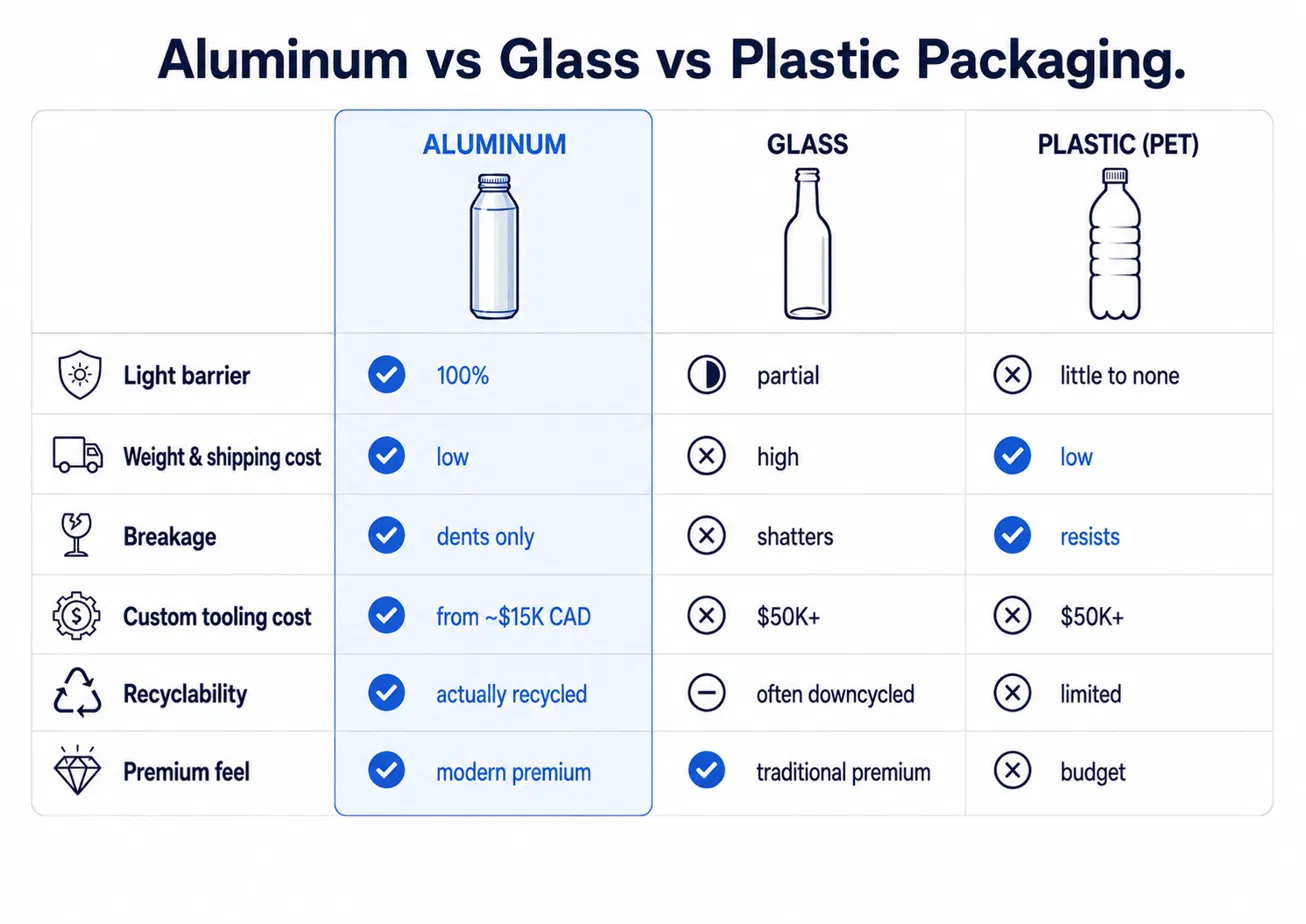
The rest of this guide unpacks each of those claims: barrier and product protection, weight and shipping economics, customization and tooling cost, durability and safety, sustainability and recyclability, premium feel, and the categories where each material makes the most sense. Where the evidence is genuinely mixed — and on sustainability, it is — we say so.
Barrier Protection: Which Material Keeps Your Product Freshest?
The first job of any package is to protect what is inside, and this is where the aluminum vs glass vs plastic comparison gets decisive. Most products that go into a bottle or can — beverages, supplements, spirits, functional drinks — degrade when exposed to light, oxygen, or moisture. Vitamins lose potency, beer goes skunky, juices oxidize, and delicate flavors fade. The packaging material is your first and most important line of defense.
Aluminum delivers a complete, 100% light barrier. This is the single most important barrier advantage and one that neither glass nor plastic can match outright. Light cannot pass through metal, full stop. Amber glass filters some UV but still lets visible light through; clear glass and most plastic offer little to no light protection at all. For any light-sensitive product — and that includes most beer, many vitamins, probiotics, and botanical extracts — an aluminum bottle or can removes the single biggest cause of light-driven degradation entirely.
On oxygen and moisture, aluminum and glass are both excellent. Both are effectively impermeable, so paired with a quality liner and closure, either creates a near-hermetic seal. Plastic is the weak link here: PET and HDPE are slightly permeable to oxygen and moisture over time, which is why long-shelf-life and light-sensitive products so often avoid plastic. As one packaging comparison puts it, glass provides great product protection due to its impermeability and does not leach harmful chemicals, while aluminum likewise offers excellent barrier properties.
The practical takeaway: for product protection, aluminum and glass are the two serious contenders, and aluminum’s total light barrier gives it the edge for anything light-sensitive. Plastic trails both.
It is worth being specific about why light is such a relentless enemy, because it is the variable most brands underestimate. Light degradation is not a slow, graceful fade — for many products it is fast and irreversible. Hops in beer react with light to produce the compound responsible for the infamous “skunky” off-flavor, and this can happen in minutes of direct exposure through clear or green glass — one of the main reasons craft beverage brands have moved to aluminum. Riboflavin (vitamin B2) and folic acid break down under light. Many botanical extracts, natural colors, and the omega-3 oils common in functional products oxidize and degrade when exposed. Even premium olive oils turn rancid faster in clear bottles. In every one of these cases, the difference between amber glass and aluminum is the difference between a product that holds its quality to the end of its shelf life and one that quietly degrades while still looking fine.
This is also why the choice interacts with how you sell. A product that moves quickly through a refrigerated retail channel faces less cumulative stress than the same product sold direct-to-consumer, where it may sit in a warm warehouse, ride in a delivery van, and wait on a doorstep before anyone opens it. The longer and less controlled your supply chain, the more aluminum’s barrier advantage compounds — which is exactly why so many e-commerce-first brands gravitate to metal. One honest nuance: amber or opaque-coated glass can approach aluminum on light protection, and on oxygen and moisture the two are effectively tied. So aluminum’s barrier edge over glass is real but specific — strongest for light-sensitive products in clear or lightly tinted formats. Against plastic, the advantage is broad and unambiguous across light, oxygen, and moisture alike.
Weight & Shipping Cost: Why Glass Drains Your Freight Budget
Here is where glass falls apart — sometimes literally. Glass is heavy and fragile, and both of those properties cost you money on every single pallet you ship. Multiple packaging analyses reach the same conclusion: the main disadvantage of glass is that it is heavy, making transportation difficult and costly, and because it is not flexible it is more likely to break during shipping.
Aluminum is dramatically lighter than glass. A custom aluminum bottle weighs a fraction of its glass equivalent, which means more units per pallet, lower freight cost per unit, and a smaller carbon footprint. For e-commerce and direct-to-consumer brands — where you are paying to ship single units to individual doorsteps — that weight difference compounds into real money fast. Plastic is also lightweight, so on pure shipping weight, aluminum and plastic are close and glass is the clear loser.
Then there is breakage. Glass breaks in transit, in the warehouse, and in customers’ hands. Every broken unit is lost inventory, a damaged-goods claim, a safety hazard, and often a lost customer. Aluminum is effectively unbreakable in normal handling. It can dent, but it will not shatter, which makes it safer for warehouse staff, couriers, and end customers, and far more forgiving of the rough realities of shipping. For brands shipping across a continent — or across the Atlantic — that durability is worth as much as the weight savings.
The verdict on logistics: aluminum and plastic both beat glass decisively on weight and breakage, with aluminum offering the durability of metal without the fragility tax that glass imposes.
It helps to see the weight difference concretely, because it scales in ways that surprise people. A standard glass beverage bottle can weigh several times what an equivalent-volume aluminum bottle weighs empty. Multiply that across a full truckload and the picture sharpens fast: freight is priced on weight and volume, so heavier packaging means you are paying to ship the container itself rather than the product inside it. With aluminum, more of every freight dollar goes toward moving your actual product, and you fit more saleable units under the same weight ceiling. With rising fuel surcharges increasingly pricing freight by the pound, every ounce of glass eats directly into your margin — a recurring tax on the P&L that an aluminum bottle simply does not levy. For a brand shipping regular replenishment orders to distributors or fulfillment centers, that recurring difference flows straight to the bottom line, order after order — and it is one reason brands increasingly source custom aluminum packaging made in North America rather than importing heavy glass from overseas.
Breakage carries a second, hidden cost that rarely shows up in a quote but always shows up in the P&L. Every glass unit that arrives broken triggers a chain of expense: the lost product, the replacement shipment, the customer-service time, the refund or reship, and the reputational ding of a customer who received a damaged order. Industry experience with fragile packaging is full of cautionary tales — a single bad run of glass can cost more than an entire quarter’s packaging budget. Aluminum simply removes this category of risk. It dents at worst, the contents stay sealed, and the unit is still usable. For high-velocity or long-distance distribution, that reliability is worth as much as any line-item saving.
Plastic matches aluminum on weight and shatter-resistance, so on pure logistics the two are close — where aluminum pulls ahead is in the premium impression an unbroken, undented metal bottle makes on arrival. But if logistics were the only consideration, the honest summary is simple: glass loses, aluminum and plastic both win.
Customization & Tooling Cost: Where Aluminum Wins Big
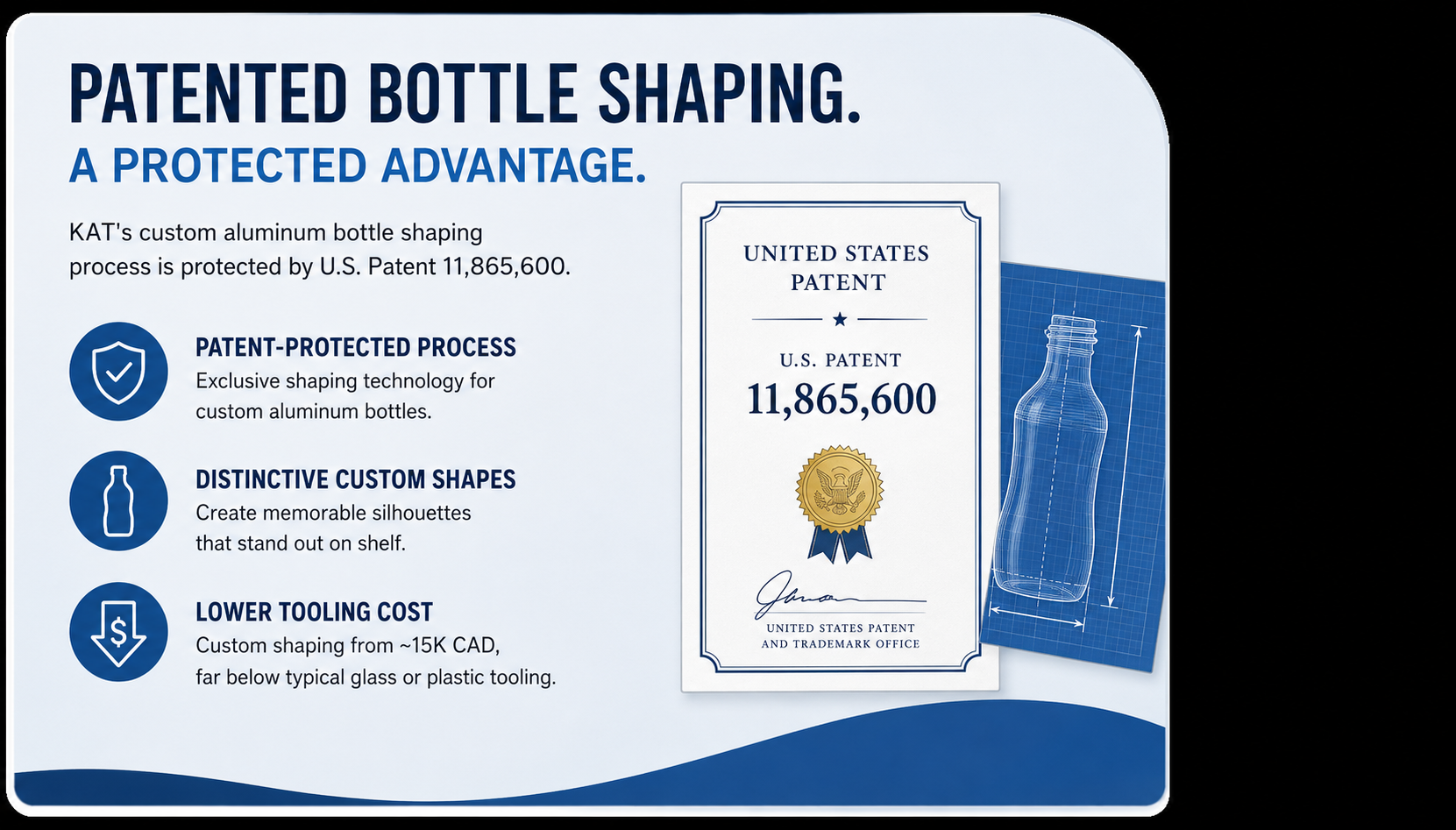
This is the comparison most guides skip entirely, and it is one of the most important for any brand that wants to stand out. If you want a truly custom-shaped container — not a stock cylinder with a label, but a bottle whose silhouette is unmistakably yours — the cost of getting there varies enormously by material.
Custom plastic packaging requires injection or blow molds, and those molds are expensive. Tooling for a custom plastic bottle routinely runs $50,000 or more, and often well beyond that for complex shapes or multi-cavity tooling. That is a brutal barrier for an emerging brand, and it locks you into enormous order volumes just to justify the tooling spend. Custom glass carries similar mold costs and high minimums.
Custom aluminum, through KAT’s patented Alumishape process (US Patent 11,865,600), changes that math fundamentally. Our tooling for a custom-shaped aluminum bottle starts around 15,000 CAD — a fraction of the cost of custom plastic or glass molds — with a minimum order quantity (MOQ) starting from roughly 15,000 units. That single fact reshapes what is possible for a small or growing brand: a genuinely custom container becomes accessible at launch, not something you defer until you are doing millions of units. Combined with short runs starting from roughly 15,000 units, it means you can own a distinctive shape without betting the company on it.
That is the customization story in a sentence: aluminum is the only one of the three materials where a fully custom shape is realistically affordable for an emerging brand. With plastic and glass, custom shaping is a six-figure commitment. With aluminum, it is a five-figure one — and your container itself becomes the brand asset instead of just a backdrop for a label.
It is worth unpacking why this gap matters so much strategically, because tooling cost is not just a number — it dictates what kind of brand you are allowed to be at each stage of growth. When custom tooling costs $50,000 or more, a custom shape is something you can only justify once you are already large, because you need enormous volume to amortize that fixed cost down to a sensible per-unit figure. That forces emerging brands into a frustrating choice: launch in a generic stock container that looks like everyone else’s, or wait years until you are big enough to afford differentiation. By then, you have spent your most formative period blending into the shelf instead of standing out on it.
The aluminum tooling advantage flips that timeline. At roughly 15,000 CAD for tooling and short runs from about 15,000 units, a distinctive custom shape becomes a launch-day decision, not a someday-when-we-are-bigger decision. You get to establish a recognizable physical identity from your very first production run — the period when standing out matters most and when a memorable package can do the most to accelerate word-of-mouth and retail buy-in. For a category as visually crowded as beverages or supplements, that head start is hard to overstate.
There is also a flexibility benefit. When custom tooling is a six-figure sunk cost, you are locked into one shape for a long time, because re-tooling means repeating the expense. With aluminum’s lower tooling economics, iterating on a shape, running a limited edition, or testing a new format for a line extension is far more approachable — the package can evolve with the brand rather than freezing it in place.
None of this means aluminum is the cheapest per unit in every scenario; for ultra-high-volume commodity products, plastic’s raw economics are still tough to beat. But for any brand that wants a genuinely custom, ownable shape without a six-figure tooling bet, aluminum is in a category of one on cost-to-differentiate.
Curious what your custom silhouette would cost? KAT’s Alumishape tooling starts around 15,000 CAD — a fraction of custom plastic or glass. Request a tooling quote →
Durability & Safety: Dents vs Shatters vs Leaching
Each material fails differently, and how a package fails matters for safety, cost, and customer experience. Glass fails catastrophically: it shatters, creating sharp hazards and total product loss. Aluminum fails gracefully: at worst it dents, and the product inside stays contained. Plastic resists breakage well but raises a different concern — chemical safety.
Consumer questions about whether packaging leaches into the product are increasingly common, and the answer differs by material. Glass is chemically inert and does not interact with its contents, which is why it has long been trusted for sensitive products. Aluminum bottles use food- and pharma-grade interior liners that prevent any direct contact between the metal and the product, delivering the same safety outcome — no metallic taste, no interaction. Modern aluminum packaging uses BPA-free liners, and buyers can specify the interior coating to suit the fill — for example epoxy versus BPA-NI (BPA non-intent) coatings, depending on product chemistry and regulatory needs. Plastic is where most leaching concern is focused, with ongoing consumer worry about certain plastics and the chemicals they may release, especially under heat. Some plastics can leach harmful chemicals, which is a recurring theme in how the public evaluates packaging safety.
For brands, the practical safety ranking is straightforward: glass and lined aluminum both deliver inert, safe contact surfaces, while plastic carries the bulk of the consumer leaching concern. Add in physical safety — no shattering — and aluminum offers the best combined profile of inert contact and unbreakable handling.
KAT’s aluminum bottles are also freezeproof. When a liquid freezes it expands, and that expansion is exactly what cracks and shatters glass — a real risk for anything chilled hard, left in a cold vehicle, or shipped through a Canadian winter. Aluminum flexes with the expansion instead of fracturing, so your product survives the freeze-thaw cycle that would destroy a glass bottle. For iced drinks, frozen pops, cold-chain shipping, and outdoor use in the cold, that is a durability edge glass simply cannot offer.
Sustainability: The Honest Recyclability Comparison
This is the section where most brand copy gets reckless, so we will be careful. The honest truth is that packaging sustainability is genuinely contested, and the “winner” depends heavily on which metric you prioritize and whether recycled content is in play.
Start with recyclability, where the gap between theory and practice matters enormously. Aluminum is infinitely recyclable with no loss of quality, a large share of all aluminium ever produced is still in use today, and — critically — it actually gets recycled, because scrap aluminum has high enough value that recovering it is economically worthwhile.
Glass is where the story breaks down. Glass is recyclable in principle, but in practice much of it never becomes new glass. In the United States, only about a third of glass containers are actually recycled, while the majority goes to landfill. A great deal of the rest is not turned back into bottles at all but crushed and downcycled into low-value aggregate or used as landfill daily cover — counted as “diverted” but never reborn as a container. The reason is economic: collection systems treat glass as a low-value material, it is heavy and expensive to haul, and virgin sand is often cheaper than recycled cullet.
Plastic is the weakest performer of all: only certain types can be recycled, real-world rates are low, and plastic waste is one of the defining environmental problems of our era.
This is the crucial nuance most “glass is endlessly recyclable” claims gloss over. The property is real, but the system rarely delivers on it. Aluminum’s advantage is that its recyclability is matched by an economic incentive that actually drives recovery, so a far higher share of aluminum genuinely re-enters the loop. When a brand says its glass packaging is recyclable, that is technically true; whether any given bottle is actually recycled into new glass is, in much of North America, unlikely. Aluminum closes far more of that gap.
Now the honest complication. When researchers run full lifecycle assessments — accounting for raw material extraction, manufacturing energy, transport, and end of life — the results genuinely conflict. Some studies have found that PET plastic bottles can produce fewer greenhouse gas emissions and use less energy and water to manufacture than aluminum cans or glass bottles, a result that surprises many people. Aluminum’s own footprint is complicated by the fact that mining bauxite (its source rock) carries real environmental impact, and aluminum with very high recycled content is not as common as we would all like. Glass, meanwhile, is fully recyclable but energy-intensive to produce because of the high temperatures involved.
So what is the defensible claim? It is this: a custom aluminum bottle made with recycled content is one of the most environmentally responsible packaging choices available, especially when compared against single-use plastic and hard-to-recycle multi-layer packaging. Aluminum combines infinite recyclability with light weight (lower transport emissions) and the highest real-world recycling rates of the three materials. We deliberately do not claim aluminum is flatly “the most eco-friendly material” — the lifecycle evidence is too mixed for that, and any brand making unqualified green superlatives risks running afoul of FTC and EU green-claims rules. What we will stand behind is that aluminium is among the most responsible and most genuinely circular options on the market, and that it lets your brand make a credible sustainability statement without overstating the science.
If you want to dig into the recyclability data yourself, the International Aluminium Institute documents how the material performs across its lifecycle. We would rather point you to the source than ask you to take our word for it.
Premium Feel & Brand Perception: What Your Package Says
Packaging is a silent salesperson, and each material sends a different signal on the shelf and in the hand. Glass has long carried premium connotations — weight in the hand reads as quality, and glass is the traditional choice for luxury spirits, fine fragrances, and premium oils. That perception is real and worth respecting. But it comes bundled with the weight and fragility costs covered above, and increasingly it is no longer the only way to signal premium.
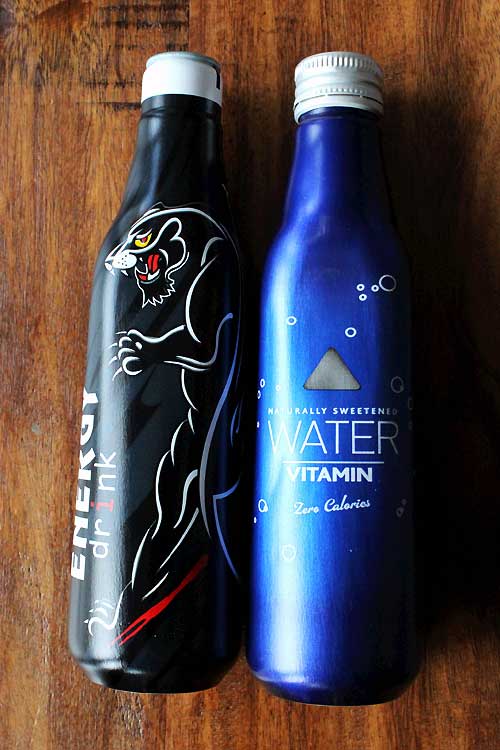
Aluminum has undergone a genuine perception shift. A custom-shaped aluminum bottle with a quality finish now reads as modern, premium, and design-forward — think of how craft beverages, premium waters, and design-led spirits have embraced metal. Because aluminum can be shaped into forms glass and plastic cannot easily achieve, the container becomes a distinctive brand asset rather than a generic vessel. The tactile cool of metal, a matte or textured finish, and an unexpected silhouette all communicate quality in a contemporary register that resonates strongly with younger and sustainability-minded buyers.
Plastic, fairly or not, sits at the bottom of the premium-perception ladder for most categories. It reads as functional and inexpensive, which is exactly right for high-volume, price-driven products and exactly wrong for anything positioning itself as premium or eco-conscious. The plastic that performs best on perception tends to be the kind that doesn’t look like plastic.
How a Custom Aluminum Bottle Sets You Apart
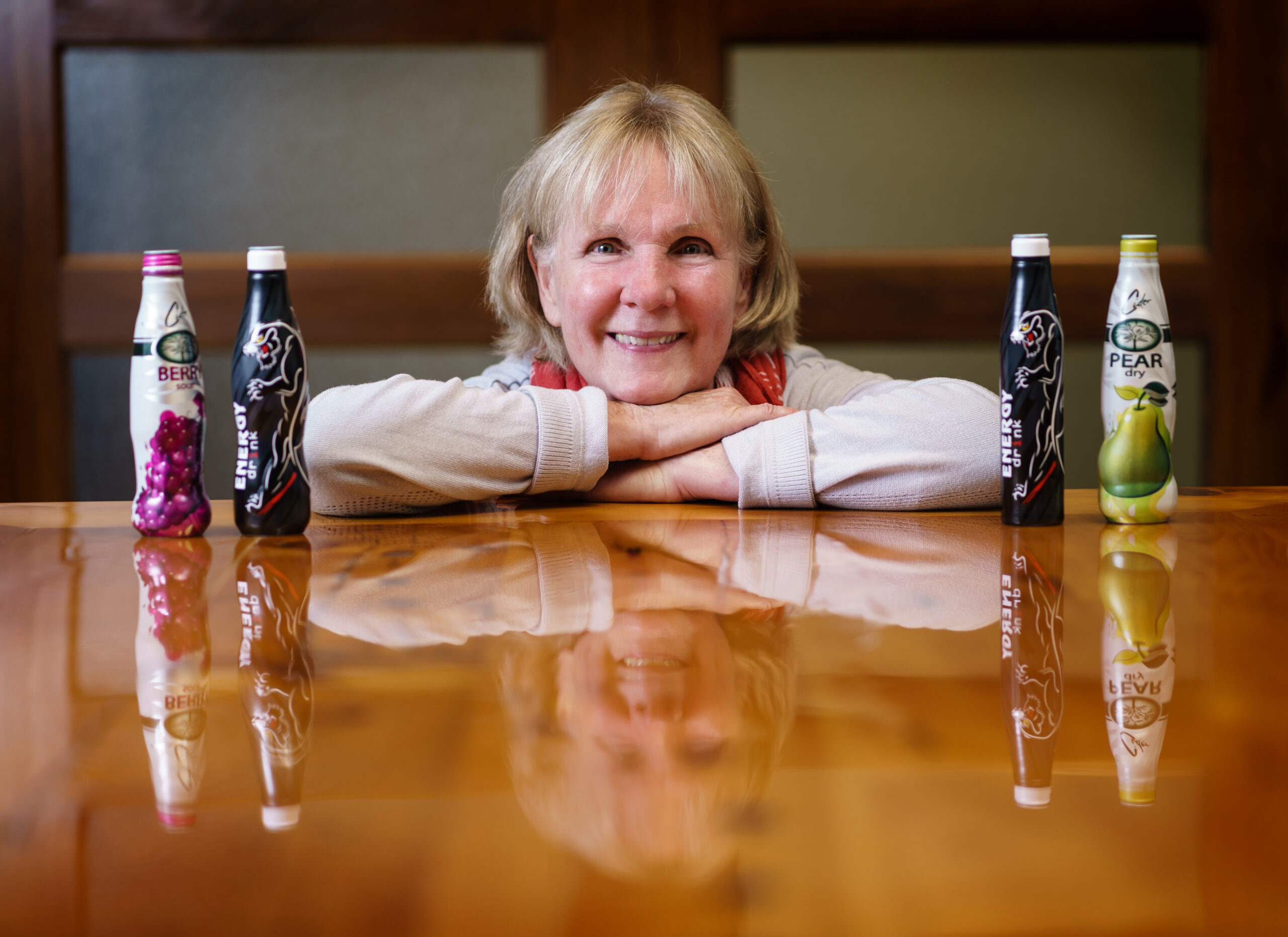
Walk down any beverage aisle, scroll any crowded product page, and you will see the same thing over and over: a forest of near-identical cylinders, each one shouting for attention with a louder label than the last. They blur together. The eye slides past them. In a market where everyone is renting the same shelf-shaped silhouette and trying to win on graphics alone, the bottle itself has quietly become the most wasted opportunity in branding.
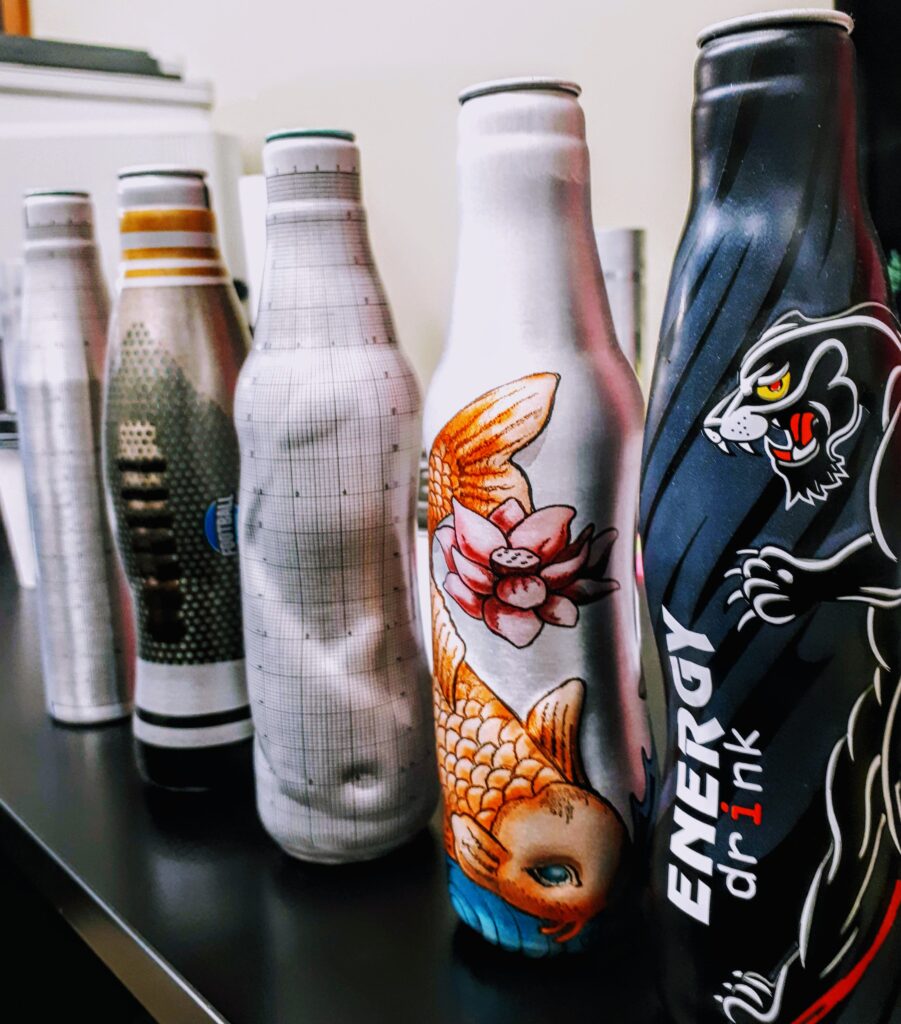
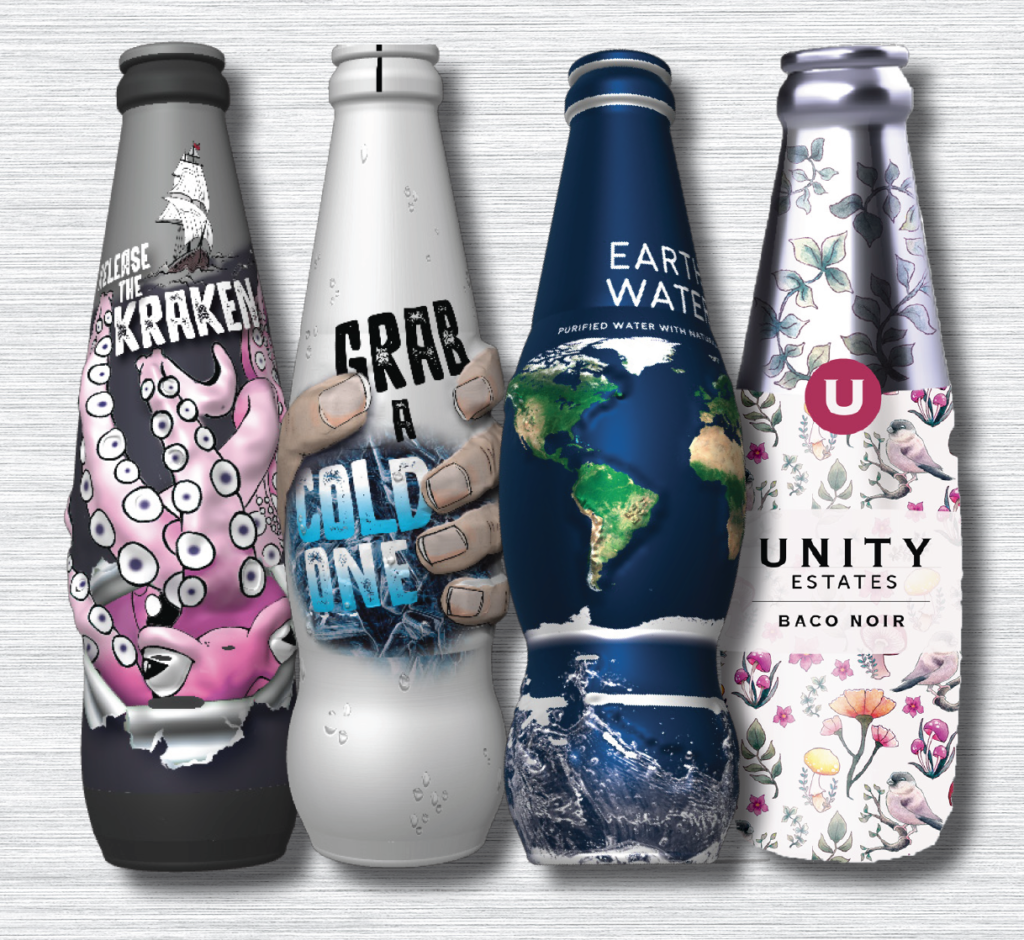
This is where a custom aluminum bottle changes everything. When your container has a shape no one else can claim — a curve, a facet, a profile that is unmistakably yours — you stop competing on the label and start competing on form. A shopper does not need to read your name to recognize you; they know you by your shoulders across the room. That is the difference between being one more entry in a category and being the bottle people point to. Glass can be shaped, but only at six-figure tooling cost that locks out all but the largest players. Plastic can be molded, but it carries none of the premium weight or sustainable story that today’s buyer rewards. Custom aluminum bottles sit in the rare sweet spot: distinctive, ownable, premium, and — through KAT’s Alumishape process — actually affordable for a growing brand.
Differentiation like this compounds. A distinctive silhouette is the gift that keeps giving: it becomes your logo in three dimensions, your social-media signature, the thing photographers frame and customers remember. It earns shelf placement because retailers love a package that draws the eye. It earns word of mouth because people share what surprises them. For Canadian, American, and European brands trying to carve out space against deep-pocketed incumbents, a custom shape is one of the few advantages that money cannot simply out-spend — because once a shape is yours, it is yours.
What Custom Aluminum Shaping Can Do
So what can the shaping really do? More than most founders imagine. The Alumishape process treats aluminum not as a fixed cylinder to be wrapped, but as a canvas to be sculpted. We can draw a bottle inward at the waist for a silhouette that begs to be held, flare it at the shoulder, emboss a texture you feel before you see, taper a neck into something elegant, or build a profile that turns an ordinary pour into a small ceremony. The metal takes the form you give it and holds it — permanently, cleanly, beautifully.
Beyond the shape itself, the surface is its own opportunity. Aluminum accepts finishes that glass and plastic struggle to match: rich matte coats that swallow glare, soft-touch textures, metallic sheens, bold full-wrap printing that runs seamlessly around a curved body with no flat label to interrupt it. Colour, finish, shape, closure, and volume all become dials you can turn to compose a package that is wholly and recognizably yours. And because aluminium is light, opaque, and endlessly formable, the design freedom never comes at the cost of protection — the same vessel that looks extraordinary also delivers the 100% light barrier and durability we covered above.
Practically, that range spans everything from sleek single-serve bottles to bold statement formats, with closure options — ROPP, crown, child-resistant — chosen to fit the product and the moment. Whether you are a craft brewery in Ontario, a functional-water startup in California, or a no-and-low spirits brand in Europe, the shaping is yours to direct. We are the producer, so the conversation about what is possible happens directly with the people who will make it real.
Events Custom Aluminum Bottles Are Perfect For
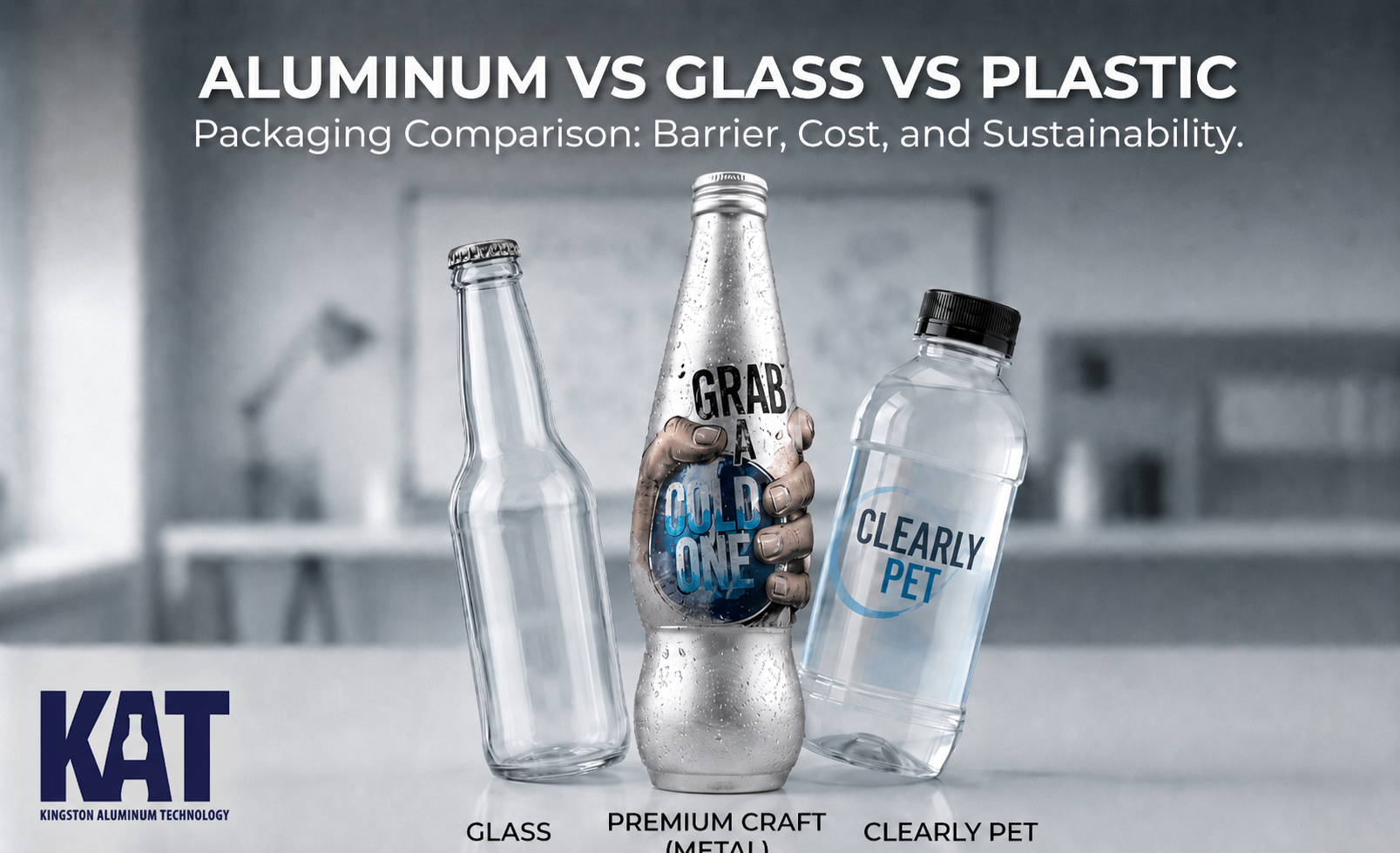
There is a particular kind of magic in handing someone a drink in a bottle that feels like an occasion. Some packaging is built to sit on a shelf; custom aluminum bottles are built to be carried, raised, photographed, and remembered — which makes them perfect for the moments where a brand comes alive in people’s hands.
Think of the places glass simply cannot go. Music festivals and outdoor concerts, where glass is banned and the crowd is exactly the audience a brand dreams of reaching. Stadiums, arenas, and ballparks, where an unbreakable, ice-cold aluminum bottle is both safer and more striking than anything else in the concourse. Pools, beaches, boats, and patios, where shatter-resistance is not a nice-to-have but a requirement — and because our bottles are freezeproof, they shrug off the cooler full of ice or the deep-freeze that would crack glass. Golf tournaments, food-and-drink festivals, farmers’ markets, and craft fairs across Canada and the US, where a beautifully shaped bottle becomes the thing people carry from booth to booth like a small trophy.
Then there are the branded moments built for sharing. Product launches and pop-ups, where a custom silhouette turns a sample into a keepsake. Weddings, galas, and corporate events, where a bespoke bottle elevates the whole table. Limited seasonal releases — a summer flavour, a holiday edition, a sporting-event tie-in — where a short run of distinctively shaped aluminum bottles, achievable from roughly 15,000 units, lets a brand show up for the occasion without committing to a permanent line. In every one of these settings, the package is doing double duty: protecting the drink and becoming the memory. That is the quiet superpower of a well-made aluminum bottle — it is the rare piece of packaging people actually want to keep.
Aluminum vs Glass vs Plastic: Head-to-Head Summary
Having gone deep on each dimension, here is how the three materials stack up when you line up the factors that actually drive a packaging decision. Think of this as the scorecard that pulls the whole comparison together.
On barrier and product protection, aluminum leads because of its total light barrier, with glass close behind and plastic a distant third. On weight and shipping cost, aluminum and plastic are both excellent and glass is the clear loser. On breakage and durability, aluminum and plastic win and glass loses. On customization cost, aluminum stands alone — affordable custom shaping where glass and plastic both demand six-figure tooling. On safety and inertness, glass and lined aluminum tie at the top and plastic carries the leaching concern. On real-world recyclability, aluminum leads clearly because it actually gets recycled at high rates, glass is recyclable in theory but often downcycled or landfilled in practice, and plastic trails badly. On full lifecycle sustainability, the picture is genuinely contested and no material wins cleanly. On premium perception, glass and design-forward aluminum lead and plastic trails. On raw upfront unit cost, plastic wins, glass is in the middle, and aluminum sits between depending on volume and customization.
Add it up and a pattern emerges: aluminum is rarely the single best on any one isolated metric except light barrier and customization cost, but it is the only material that avoids being the worst on any metric that matters. Glass wins prestige but loses logistics badly. Plastic wins cost but loses perception and protection. Aluminum is the balanced choice — the material that compounds the most advantages across the full life of a brand without a glaring weakness. That is precisely why so much of the market has been migrating toward it.
How to Choose the Right Packaging Material
Rather than asking “which material is best” in the abstract, the useful question is “which material is best for my product, my channel, and my stage.” Here is a framework that cuts through it.
Start with your product’s sensitivity. If your product is light-sensitive — beer, many supplements, natural colors, oils, probiotics — aluminum’s total light barrier moves it to the top of the list immediately, and plastic should probably be ruled out. If your product is robust and shelf-stable, barrier matters less and the decision opens up to cost and perception factors.
Then weigh your channel. If you sell direct-to-consumer or ship long distances, the weight, breakage, and barrier advantages of aluminum compound heavily, and glass becomes an expensive liability. If you sell through a tight, refrigerated, local retail channel, glass’s drawbacks are less punishing and its premium cue may be worth the cost.
Next, consider your brand positioning. If standing out and signaling modern, sustainable premium-ness is central to your brand, a custom-shaped aluminum bottle does that at a tooling cost emerging brands can actually afford. If you are competing purely on price at high volume, plastic’s economics are honest and hard to beat. If you are a heritage-luxury play where weight-in-hand is part of the ritual, glass still has a real argument.
Finally, factor in your stage and your sustainability story. Early-stage brands benefit most from aluminum’s low cost-to-differentiate and its credible circularity story, both of which punch above their weight in building a young brand. If you have unlimited tooling budget and enormous volume, more options open up — but very few emerging brands are in that position, which is exactly why aluminum has become the pragmatic favorite for the brands defining the next wave of beverage, water, spirits, and wellness. For the full picture of how custom aluminum bottles are made, shaped, printed, and sourced, our complete guide to custom aluminum bottles covers it end to end.
There is no universal winner — the right choice depends on what you are selling and how you go to market. Here is how the decision breaks down by category, based on where the market is actually moving.
- Craft beverages, beer & functional drinks — aluminum wins decisively. 100% light barrier stops beer going skunky, unbreakable for distribution, custom shapes stand out in the cooler, and cans reach glass-banned venues like stadiums, festivals, and pools. This is aluminum’s strongest category — more in our guide to aluminum beverage bottles.
- Premium & sparkling water — aluminum, increasingly. Eco-conscious buyers respond to recyclability and light weight, and when the liquid is undifferentiated, a custom aluminum bottle lets the package become the brand. Glass holds a hospitality niche.
- Spirits, RTDs & no/low alcohol — a genuine split. Glass still owns traditional premium spirits on perception. Aluminum is winning the fast-growing RTD and no/low space, where portability, unbreakability, and a modern look beat heritage cues.
- Supplements, vitamins & nutraceuticals — aluminum for protection. Total light barrier protects light-sensitive actives, child-resistant caps handle compliance, and unbreakability matters for the e-commerce channel. Plastic offers the weakest protection of the three. See our deep dive on custom aluminum bottles for supplements.
- Cosmetics & personal care — mixed, trending to metal. Glass dominates premium serums and fragrances; aluminum suits light-sensitive, sustainability-led products; plastic holds high-volume daily-use items. Rising scrutiny of plastic pushes the category toward aluminum and glass.
- High-volume, price-driven products — plastic still wins. If your product is inexpensive, high-volume, shelf-stable, and not light-sensitive, plastic’s low unit cost is honestly hard to beat. Aluminum’s case is strongest where differentiation and protection carry commercial weight.
Why Brands Choose KAT for Custom Aluminum Packaging
If this guide has you leaning toward aluminum, here is what working with KAT looks like. We are a North American manufacturer — based in Kingston, Ontario — with more than 60 years of experience behind manufacturing bottles and cans, producing custom aluminum packaging for Canadian, American, and European brands. We are the producer, not a broker, so you work directly with the people who make your packaging.
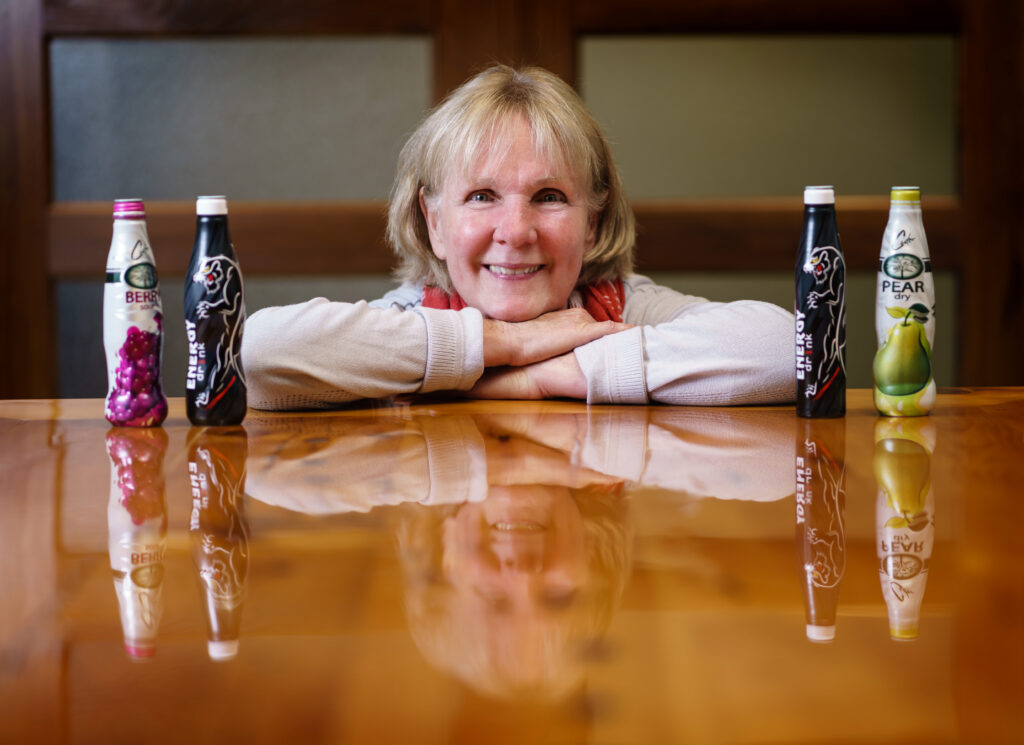
That direct line includes leadership with rare depth in this exact field. KAT is led by Betty Pilon, whose career has shaped beverage packaging at the highest levels of the industry.
Before KAT, she served as President of Montebello Packaging, a Jim Pattison Group company employing hundreds of people across multiple countries. She was the only female executive in that company for nearly thirty years.
Her record there is singular. She is the only woman ever to win the Jim Pattison President’s Trophy — and she won it twice. Her contributions to beverage packaging are documented in the patent registry and the packaging trade press.
That pedigree, backed by more than six decades of manufacturing bottles and cans, is the foundation KAT is built on: deep experience doing packaging at scale, brought to bear on custom aluminum for emerging and established brands alike.
Our patented Alumishape process makes custom shapes affordable: tooling from around 15,000 CAD versus the 50,000-plus that custom plastic molds typically demand, with an MOQ from roughly 15,000 units. We offer closure options including ROPP, crown, and child-resistant caps, BPA-free liners with epoxy or BPA-NI coating options, and handle cross-border logistics end-to-end so the border never becomes your problem. Brands across beverage, water, spirits, and wellness have used KAT to turn a packaging idea into a distinctive product on the shelf — trading a generic format for a custom aluminum bottle that makes the brand instantly recognizable in the cooler.
To go deeper on specific use cases, see our guides on custom aluminum bottles for supplements, aluminum beverage bottles, and custom aluminum bottles for craft beverage brands. For the full overview of how these containers are made and sourced, read our complete guide to custom aluminum bottles, and if you are sourcing on this side of the ocean, our guide to custom aluminum packaging made in North America.
Get a Sample Box & See the Difference
The fastest way to settle the aluminum vs glass vs plastic question for your own product is to hold the alternatives in your hand. Request a KAT sample box, see and feel our custom aluminum bottles, and talk to the people who would actually make your packaging.
Frequently Asked Questions
Is aluminum better than glass for packaging?
For most modern beverage, supplement, and functional-drink brands, aluminum offers the better overall balance: it provides a 100% light barrier (glass only filters some light), it is far lighter and cheaper to ship, and it will not shatter. Glass still wins on traditional premium perception and is chemically inert, but lined aluminum matches that inertness while avoiding the weight and breakage costs.
Is aluminum more sustainable than plastic?
On recyclability, yes — aluminum is infinitely recyclable with no loss of quality and has far higher real-world recycling rates than plastic, while only certain plastics can be recycled at all. Full lifecycle comparisons are more contested and depend on recycled content and methodology, so the most accurate statement is that aluminum is one of the most genuinely circular and responsible options, especially against single-use plastic.
How much does custom aluminum packaging cost compared to plastic?
The biggest difference is tooling. Custom plastic molds typically cost $50,000 or more, while KAT’s custom aluminum tooling through the Alumishape process starts around 15,000 CAD. That makes a fully custom shape realistically affordable for emerging brands in aluminum, where it usually is not in plastic or glass.
Does aluminum packaging affect the taste of the product?
No. Aluminum bottles and cans use food- and pharma-grade interior liners that prevent any direct contact between the metal and the contents, so there is no metallic taste and no interaction with the product.
Which packaging is cheapest to ship?
Aluminum and plastic are both far cheaper to ship than glass because they are lightweight, and aluminum adds the benefit of being effectively unbreakable, which reduces damaged-goods losses. Glass is the most expensive to ship due to its weight and fragility.
Are aluminum bottles freezeproof?
Yes. KAT’s aluminum bottles are freezeproof. Unlike glass, which cracks when a freezing liquid expands, aluminum flexes with the expansion instead of shattering — so it survives freeze-thaw cycles, cold-chain shipping, and a cooler full of ice.
What is the difference between aluminum and aluminium?
None — they are the same material. “Aluminum” is the North American spelling and “aluminium” is the British and international spelling. KAT manufactures the same custom bottles and cans regardless of which spelling you search for.